
Asphalt Driveways in Melton
Asphalt is the driveway most of Melton's rural and acreage blocks already have, and the one more estate owners ask about as concrete prices climb. Done properly it is a hot mix wearing course over a real base, with a concrete crossover at the kerb because council will not accept anything else there.
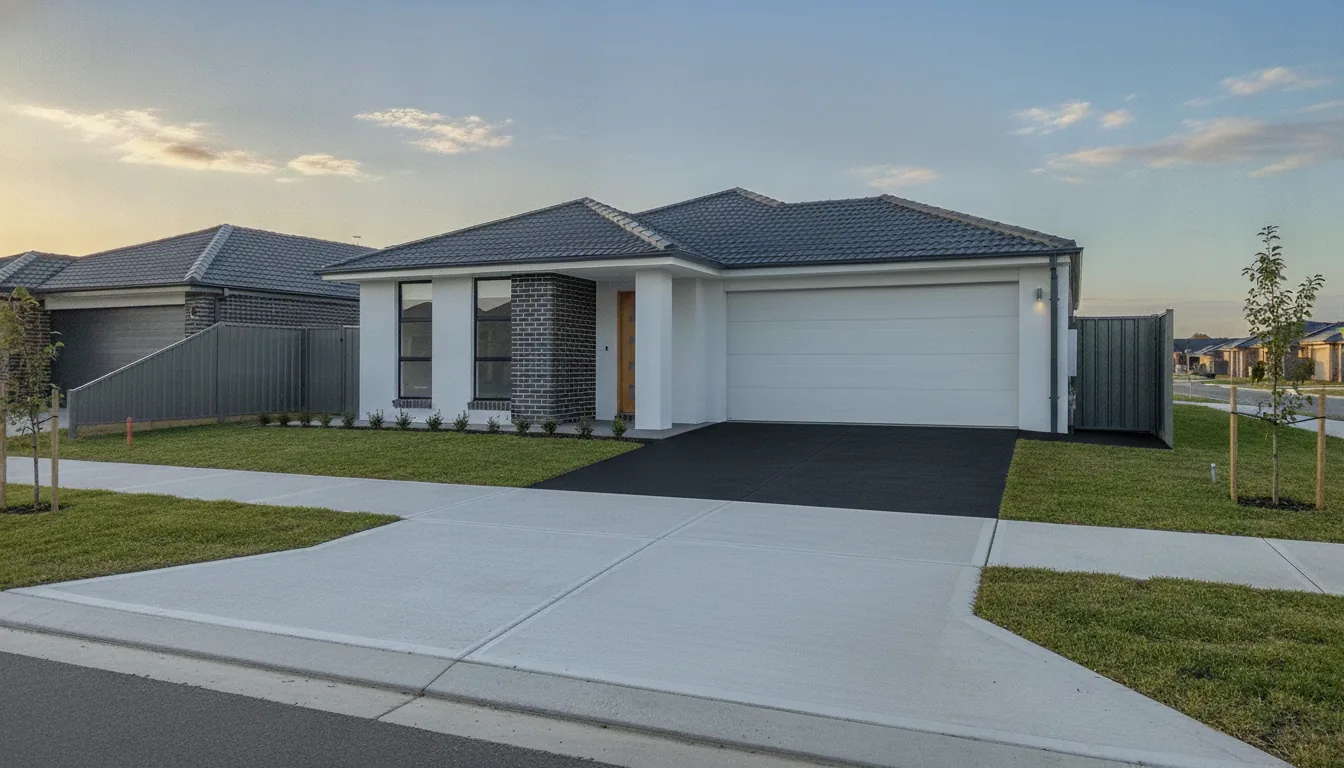
Asphalt or bitumen? Same driveway, two names
Around Melton people ask for a bitumen driveway about as often as an asphalt one, and they mean the same thing. Bitumen is the black binder. Asphalt is bitumen mixed with graded crushed stone and sand at an asphalt plant, delivered hot and rolled flat. A genuine bitumen-only surface does exist — a spray seal, where hot bitumen is sprayed onto the base and loose stone is rolled into it — and it is a cheaper, rougher product with a different job. We cover it further down so you can ask for the right one.
What a hot mix asphalt driveway is made of
The mix arrives from the plant at around 150 degrees and has to be laid and compacted before it cools, which is why asphalt crews work fast and why the distance from the plant matters. For a residential driveway we lay a dense-graded 7 mm or 10 mm mix 30 to 40 mm thick, compacted with a roller while it is still hot. That wearing course is the part you see. It is not the part that decides whether the driveway lasts.
Underneath it sits 100 to 150 mm of compacted crushed rock base, placed in layers and rolled, on a subgrade that has been shaped to fall and compacted. Asphalt is a flexible pavement: it spreads the wheel load down through the base rather than bridging over soft spots the way a reinforced concrete slab does. That is its strength and its weakness. A thin asphalt skin over a thin base fails within a couple of winters. The same skin over a properly built base outlasts the cars that park on it.
The edges need containing. Asphalt has no strength at a free edge and will crumble if tyres run over it, so we finish against a concrete edge strip, a garden edge or a compacted shoulder that the surface can lean on.
Why asphalt suits Melton's clay, and where it does not
Melton's basalt-plain clay swells and shrinks with the seasons, and it is the reason so many concrete driveways here crack. Asphalt handles that movement better because it flexes with the ground instead of resisting it, and a crack in asphalt is a repair rather than a replacement. On long rural driveways in Rockbank, Toolern Vale, Exford and Diggers Rest that flexibility is the reason asphalt is the default.
The trade-off is heat. Melton summers run past 40 degrees and fresh asphalt softens on those days. Power steering turned while the car is stationary scuffs it, and a caravan jockey wheel or trailer stand will sink a dimple into it. Both are avoidable with a paver or a plate under the load, and both matter less as the surface hardens through its first summer.
The crossover still has to be concrete
Behind your property boundary the driveway is your choice. The crossing between the boundary and the kerb sits in council's road reserve and has to be built to Melton City Council's standard drawing, which specifies concrete. Council will not permit an asphalt crossover on a kerbed street, and an unpermitted one becomes a compliance problem when you sell.
So an asphalt driveway in a Melton estate is really two jobs: a concrete crossover through the permit and inspection process, and an asphalt driveway laid up to it. We quote both as one number, with the joint on the boundary so the change of surface reads as deliberate. On unkerbed rural roads the crossing is usually a culvert-style rural crossing built to council's rural standard, and the same permit applies.
Already have an asphalt driveway? It may only need resurfacing
If your existing asphalt is grey, rough and cracked at the surface but still flat, the base is probably sound and a new 25 to 30 mm hot mix overlay will give you a new driveway for a fraction of the cost of digging it out. Where it has rutted, sunk or potholes keep coming back, the base has failed and an overlay would follow it down. We cover how to tell the difference, and what each costs, on our driveway resurfacing page.
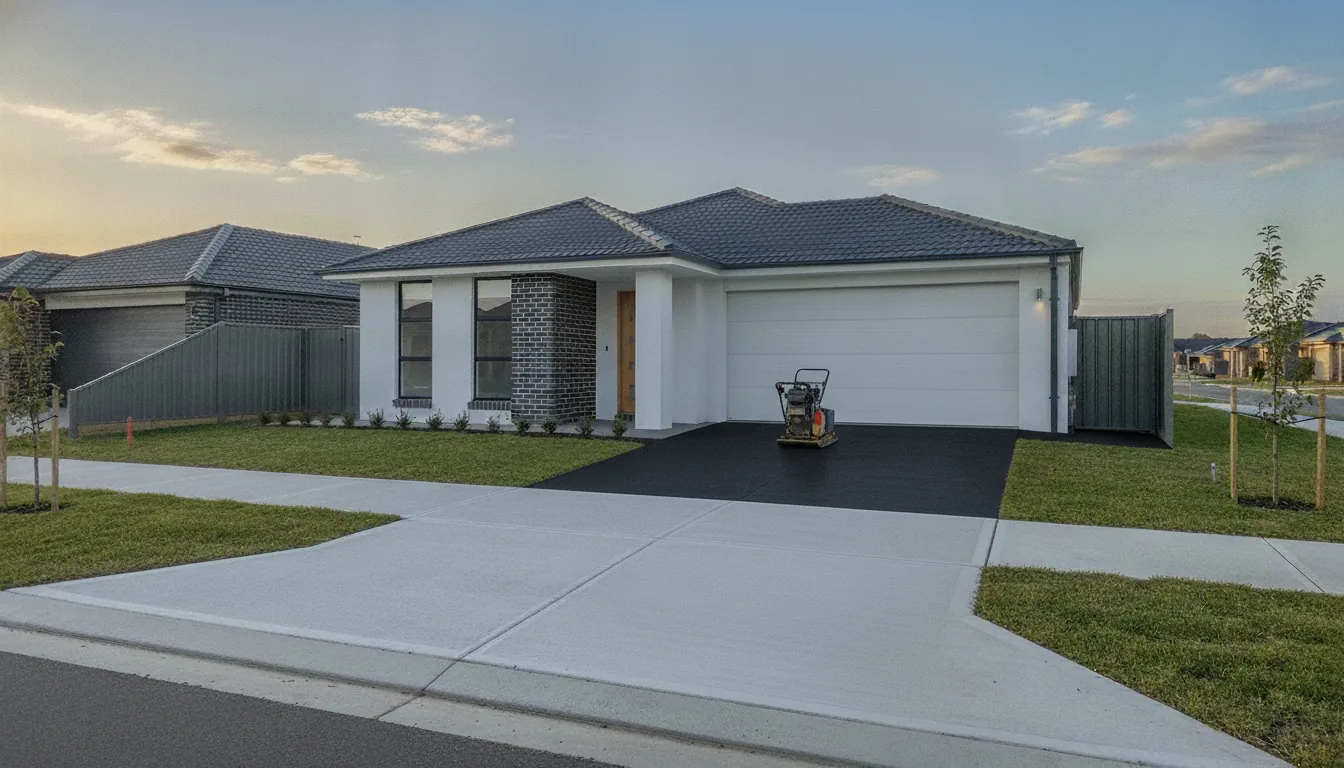
Sealing, spray seal and repairs
New asphalt should not be sealed straight away. The oils in the mix need six to twelve months to cure out, and a seal coat applied too early traps them and stays soft. After that first summer, a bitumen emulsion seal coat every three to five years keeps water out of the surface and slows the fade from black to grey. Sealing is maintenance, not repair. It will not fix ruts, cracks wider than a few millimetres or a soft base.
A spray seal is a different product: hot bitumen sprayed onto a prepared base with aggregate rolled into it. It is what most rural councils use on sealed roads, and it is the cheapest sealed surface you can put on a long farm driveway. It is rougher underfoot, sheds loose stone for the first few weeks, and is not the finish most people picture for a driveway in a new estate.
Potholes and cracks are worth fixing early. A pothole is water getting into the base, and every wet week it goes unfilled makes the repair larger. We cut back to sound material, restore the base and lay hot mix into the patch rather than tipping cold mix into a hole.
Recycled asphalt
Reclaimed asphalt is the material milled off roads when they are resurfaced. Laid and compacted it knits together in warm weather into a firm, dark surface for a fraction of the price of hot mix, and it is a sensible choice for a long rural driveway or a hardstand where appearance comes second to cost. It is not hot mix. It stays somewhat loose at the edges, it will not give you a crisp finish against a garage slab, and its quality varies with the road it came off. We will tell you honestly whether it suits your block.
What an asphalt driveway costs in Melton
Asphalt is priced by area, but the number that surprises people is the minimum. The paver, the rollers and the crew have to be mobilised whether the driveway is 40 square metres or 400, and hot mix comes by the truckload. A short single driveway in an estate carries a minimum charge that makes it not much cheaper than concrete. The saving grows with the size of the job, which is why asphalt wins on long driveways and hardstands.
Beyond that, the price moves with what is under it. A new driveway on a bare block needs excavation, spoil removal and a full base. A resurfacing job needs neither. Access for the trucks, the amount of fall across the block, existing driveway removal and whether the crossover is included all change the figure. We quote on site and state the asphalt thickness, the base depth and what is included, so you can compare it fairly against another quote.
Asphalt vs concrete for a Melton driveway
Concrete costs more, lasts longer and gives you the decorative finishes most estate owners want at the front of a new home. Asphalt is cheaper on anything long, quicker to use, easier to repair, more tolerant of clay movement, and it is black. Concrete wins on a standard double driveway in Cobblebank or Strathtulloh. Asphalt wins on a 60 metre run to a shed in Toolern Vale. Between those two it comes down to budget and how you feel about the look. We do both, so we will give you a straight answer rather than sell you the one we happen to be laying that week.
When can you drive on it?
Cars can use a new asphalt driveway after 24 to 48 hours, longer on a hot day. For the first few weeks avoid turning the wheels while stationary, keep trailer stands and jockey wheels off it or put a board under them, and keep heavy vehicles off it for a month or so. The surface keeps hardening through its first year and is at its most vulnerable in its first summer.
Why choose us for asphalt driveways
- Hot mix laid 30 to 40 mm thick over a compacted crushed rock base, not a skin over topsoil
- Concrete crossover to council standard included under the same permit and quote
- Honest call on resurfacing versus replacement before we price the job
- Edges contained against a strip or shoulder so the surface does not crumble under tyres
- Quotes state asphalt thickness, base depth and exactly what is included
Asphalt Driveways — common questions
How much does an asphalt driveway cost in Melton?
As a rough guide, hot mix asphalt laid over an existing sound base runs somewhere around $50 to $100 per square metre in Melbourne's west, and a new driveway with excavation and a full crushed rock base is more, often in the $90 to $150 range. Treat those as a starting point rather than a quote. Small driveways carry a minimum charge because the paver, rollers and crew cost the same to mobilise on a 40 square metre job as on a 400 square metre one, so the per-metre rate falls as the area grows. We quote on site, and the quote states thickness, base depth and what is included.
Asphalt or concrete: which is better for a Melton driveway?
Concrete costs more, lasts longer, and gives you exposed aggregate and coloured finishes. Asphalt is cheaper on long runs, usable within a day or two, easier to patch, and copes better with the movement of Melton's reactive clay. On a standard estate driveway the minimum charge for asphalt narrows the price gap, so concrete usually wins there. On a long rural driveway or a hardstand, asphalt usually wins. We lay both, so ask us and you will get a straight comparison for your block.
Can you lay asphalt over my old concrete driveway?
Often, yes. The slab needs to be structurally sound, and there has to be room to raise the surface by 25 to 40 mm at the garage door and the front threshold without creating a lip or trapping water. The joints in the concrete will eventually show through as fine cracks in the asphalt, which is cosmetic rather than a failure. Where the slab is heaving, badly cracked or sitting on a failed base, an overlay will follow it, and removal is the better path.
Does my crossover have to be concrete if the driveway is asphalt?
On a kerbed street in Melton, yes. The crossing sits in the road reserve and must be built to Melton City Council's standard drawing, which specifies concrete, under a permit and with an inspection. Council does not approve asphalt crossovers there. The usual arrangement is a concrete crossover to the boundary and asphalt behind it, with the joint on the boundary line. On unkerbed rural roads the crossing is normally a piped culvert crossing to council's rural standard, and a permit is still required. Confirm current requirements with Melton City Council, as standards are reviewed periodically.
How long does an asphalt driveway last?
A hot mix driveway on a properly built base typically gives 15 to 25 years, with a seal coat every three to five years and prompt repair of any cracks or potholes. The base decides most of that. A thin layer on poorly prepared clay can rut and pothole within two or three winters, while the same mix on a compacted 150 mm base outlasts the cars that use it. Resurfacing at the end of that life is cheaper than a new driveway when the base is still sound.
When should I seal a new asphalt driveway?
Not straight away. New asphalt needs six to twelve months for the lighter oils in the mix to cure out, and a seal coat applied too early traps them and leaves the surface soft. After the first summer, a bitumen emulsion seal coat every three to five years keeps water out and slows the fade to grey. Sealing is maintenance rather than repair: it will not fix ruts, wide cracks or a soft base, and those need to be dealt with before the seal goes on.
Why does my asphalt driveway keep getting potholes?
Because water is getting into the base. Asphalt itself does not pothole; the base under it softens when it gets wet, the surface flexes over the soft spot, cracks, lets more water in, and the hole grows. On Melton's clay that cycle is quick. A pothole that comes back after being filled with cold mix is telling you the base under it has failed and needs to be cut out and rebuilt, not just topped up. Fixing the drainage that is delivering the water is usually part of the answer.
What is the difference between asphalt and a spray seal?
Hot mix asphalt is stone and sand pre-mixed with bitumen at a plant, delivered hot and rolled into a smooth, dense layer. A spray seal is hot bitumen sprayed onto a prepared base with loose aggregate rolled into it, the way most rural roads are sealed. Spray seal is cheaper per square metre and suits long farm driveways, but it is rougher, sheds stone for a few weeks, and does not give the smooth black finish people expect at the front of a house. Ask which one a quote is offering, because both get called bitumen.
Ready to book asphalt driveways?
Contact us today for your free, no-obligation quote.