
Crossover Permits & Road Reserve Consent in Melton
Two separate approvals are needed before anyone touches the kerb: council's crossover approval, and consent to work in the road reserve. They are not the same thing, and both come before the concrete.
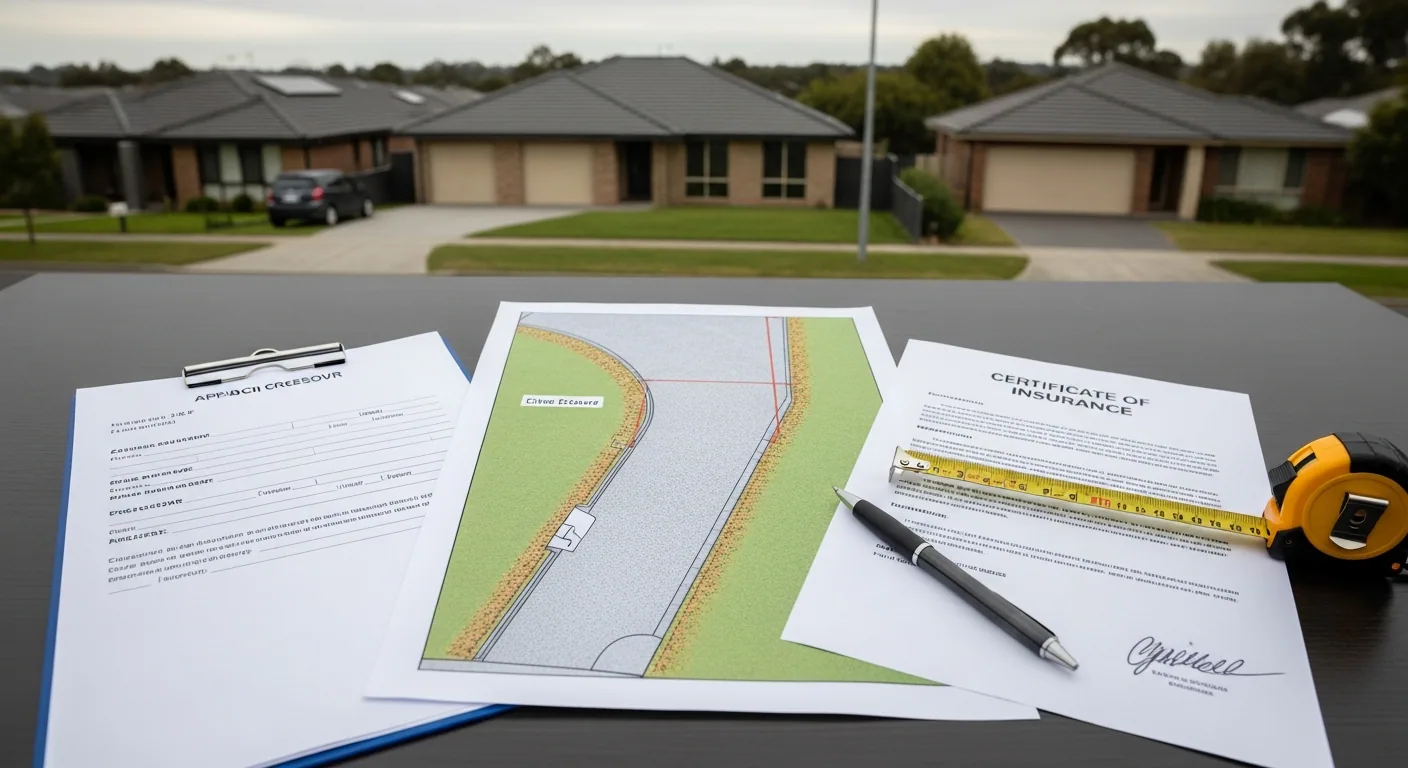
Two approvals, not one
This trips up most homeowners and a fair few concretors.
1. Crossover approval (a "crossover variation"). Council's written approval to build a new crossover or modify an existing one. A technical officer inspects the site and decides whether to approve, and with what conditions. You receive a letter of approval setting those conditions out.
2. Consent to work in the road reserve. A separate consent required under the Road Management Act before any work begins on council land. It is obtained by the contractor, not by you, and it requires two things: a certificate of currency for public liability insurance with a minimum $10,000,000 cover, and the crossover letter of approval.
You cannot get the second without the first, and no work may start until both are in hand.
The two exceptions
Council's policy names two situations where a crossover variation approval is not required — though consent to work in the road reserve is still required:
1. Where the owner or occupier is constructing the first original standard crossover in the position shown on the approved engineering road and drainage plan for the estate. 2. Where a planning permit has been issued showing the location of the new crossovers, since those are checked against council standards through the planning permit process.
If you are in a newer Melton estate and building the driveway the plan always showed, you may fall into the first category. It is worth checking rather than assuming, in either direction.
When a planning permit is also needed
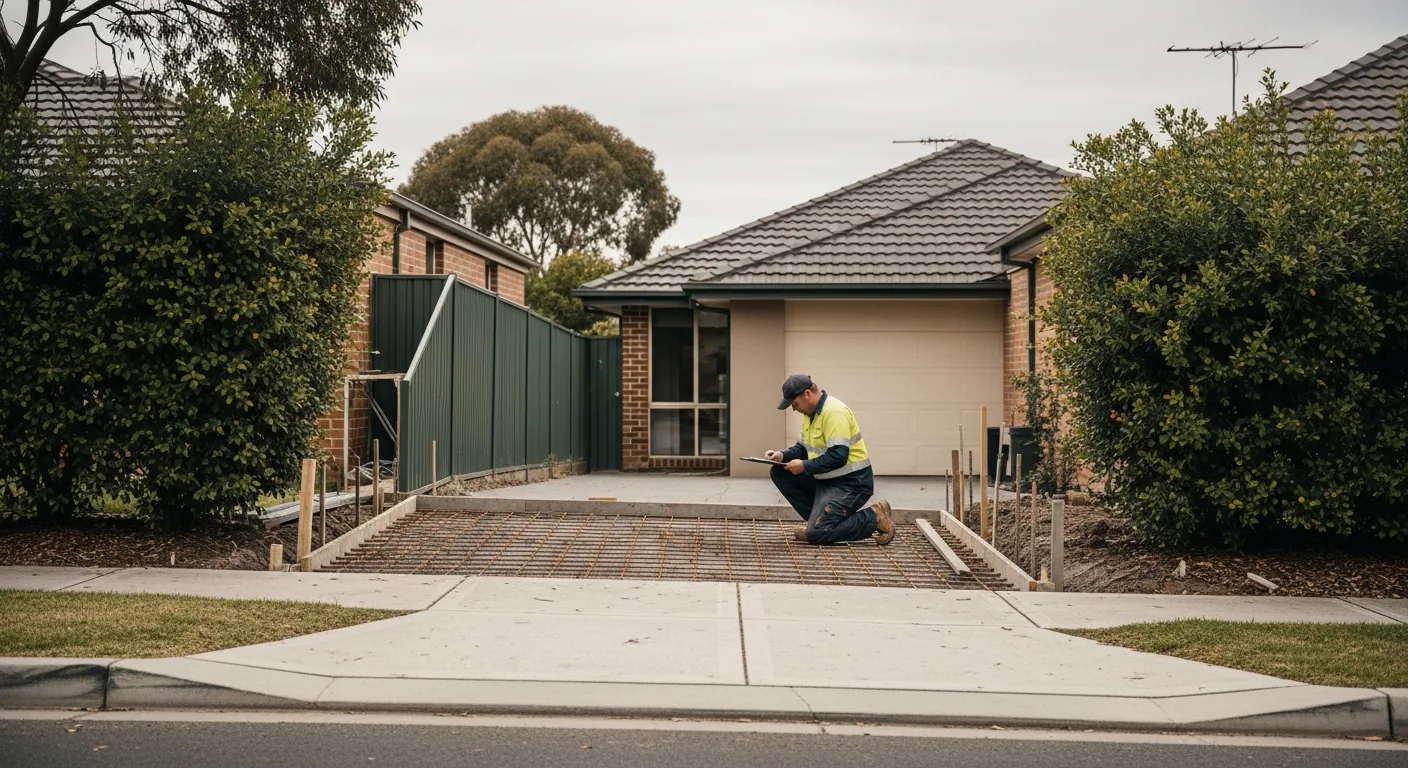
Separately from the above, a planning permit may be required where:
The crossing is onto a State or arterial road
Zoning or overlay provisions require one — for example land next to a Road Zone or in a Heritage Overlay
The works form part of something like a two-lot subdivision where a new crossover is proposed
Council's policy is explicit that meeting planning obligations is the property owner's responsibility. And where your estate has a Housing Design Guideline endorsed under the planning scheme, its conditions — often including crossover width — apply on top of everything else, and all crossover approvals must comply with them.
The full sequence
Following council's own process flowchart:
| Step | Who | |---|---| | Crossover variation application lodged | Owner or agent | | Site inspection; approval and conditions determined | Council technical officer | | Letter of approval issued with conditions | Council | | Consent to work in the road reserve obtained | The contractor | | Box out, formwork, reinforcement, sub-base | Contractor | | Pre-pour inspection — conditions, set-out, reinforcement, sub-base compaction | Council construction supervisor | | Pour and finish | Contractor | | Nature strip reinstated with topsoil and seed | Contractor |
The pre-pour inspection is the checkpoint that matters. Council's supervisor checks the approval conditions, the set-out, the reinforcement and the sub-base compaction, and concrete cannot be poured until that passes. Where a crossover is being relocated, the saw cutting of the existing crossover must be observed during the inspection — so it cannot be done quietly beforehand.
What it costs
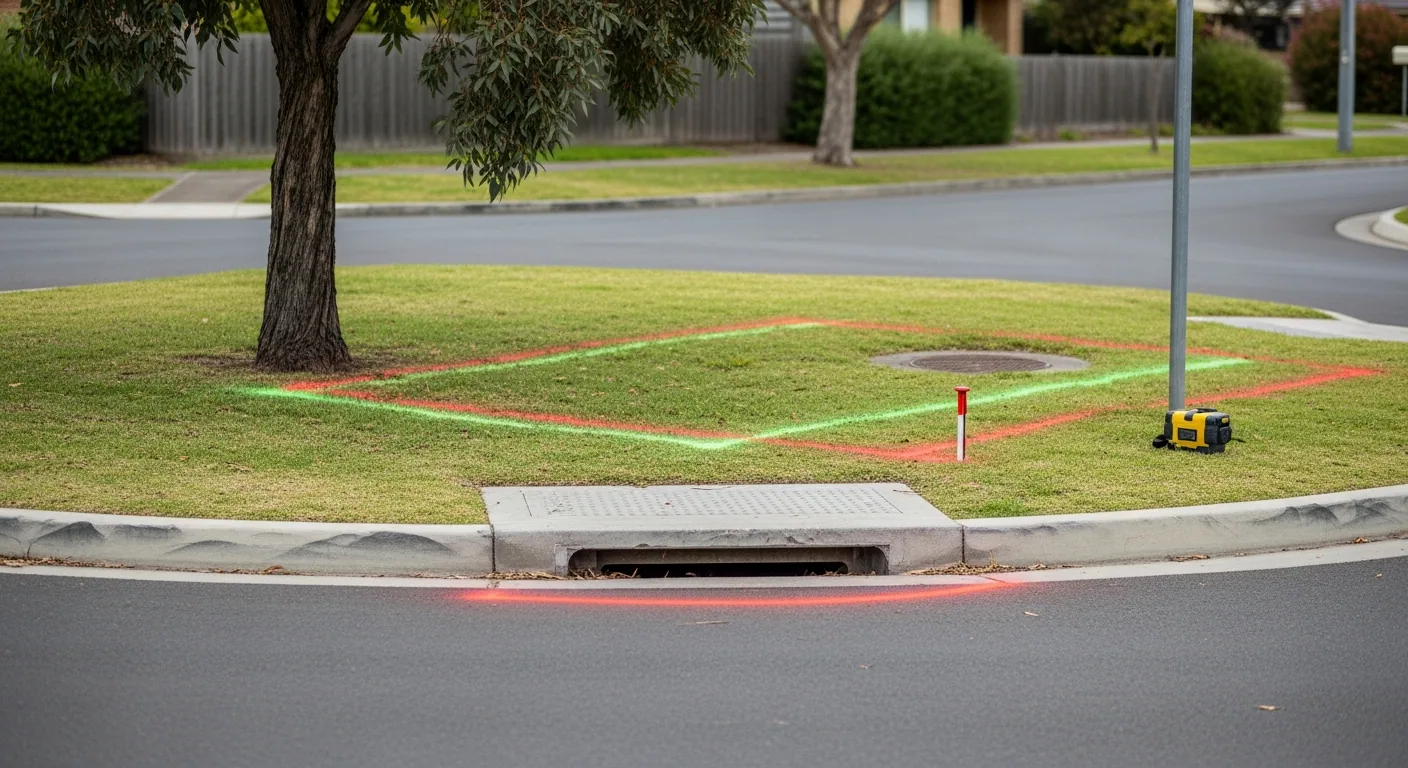
Council charges fees for crossover applications, and they are reviewed periodically, so we confirm the current figures with council when we lodge rather than quoting you a number that may have moved. What we can tell you is that council's policy is unambiguous on who pays: any costs associated with the crossover variation shall be borne by the property owner, including any service relocation that turns out to be necessary.
Illegal crossovers
Council defines an illegal crossover as one not constructed to council standards, or constructed without council approval. Either limb is enough — a well-built crossover with no approval is still illegal, and so is an approved one built to the wrong specification.
Illegal crossovers breach Melton's Local Law 2015, with penalties detailed in Section 25.
If you have bought a property with a crossover you suspect was never approved, it is worth dealing with rather than hoping. We can assess it against MCC 501 and the clearance table and tell you what bringing it to standard would involve.
If council refuses
Council's policy includes a formal dispute process. A written dispute goes to the Manager Engineering Services and is responded to within 10 working days. It is considered by a panel comprising the Manager Engineering Services, the Manager Planning Services and the General Manager Planning and Development, and the panel's decision is final.
In our experience most refusals come down to clearances — a tree, a pit, a pole or a pram crossing — and most of those are solved by moving the crossover along the frontage rather than by arguing. Which is why we measure against the clearance table before anything is lodged.
Why choose us for permit & road reserve paperwork
- Both approvals handled — crossover variation and road reserve consent
- Clearances checked against council's table before lodging, not after
- $10 million public liability certificate provided as council requires
- Pre-pour inspection booked and attended, including saw-cut observation
- Current council fees confirmed at lodgement rather than guessed at
Permit & Road Reserve Paperwork — common questions
What permits do I need for a crossover in Melton?
Two separate things. First, council's crossover approval — a "crossover variation" — where a technical officer inspects the site and issues a letter of approval with conditions. Second, consent to work in the road reserve under the Road Management Act, obtained by your contractor, which requires a public liability certificate with minimum $10 million cover plus the approval letter. No work can start until both are held.
Is there any situation where I do not need crossover approval?
Two. Where you are building the first original standard crossover in the position shown on your estate's approved engineering road and drainage plan, and where a planning permit has already been issued showing the crossover location — those get checked through the planning process instead. Note that in both cases consent to work in the road reserve is still required. It is worth confirming which applies to you rather than assuming.
Do I need a planning permit as well?
Sometimes. A planning permit may be required where the crossing is onto a State or arterial road, where zoning or overlay provisions require one — land next to a Road Zone or in a Heritage Overlay, for example — or as part of something like a two-lot subdivision. Council's policy makes meeting planning obligations the owner's responsibility, so it is worth establishing early.
How much does a crossover permit cost?
Council sets the application fees and reviews them periodically, so we confirm the current figures with council at lodgement rather than quoting a number that may have changed. What is fixed is who pays: council's policy states that any costs associated with a crossover variation are borne by the property owner — including relocating a service asset if that turns out to be necessary.
Who applies — me or the concretor?
The crossover variation application relates to your property, and we lodge it as your agent. The consent to work in the road reserve is obtained by the contractor, because it requires the contractor's own public liability certificate of currency with minimum $10 million cover. In practice we handle both and keep you out of the queue, but the property-side application is made in your name.
What is the pre-pour inspection and can it be done afterwards?
No, it cannot. Once formwork and reinforcement are in place and before concrete is poured, council's construction supervisor inspects the approval conditions, the set-out, the reinforcement and the sub-base compaction. Only when that passes can you pour. Where a crossover is being relocated, the saw cutting of the existing crossover must also be observed during that inspection — so none of it can be quietly completed in advance.
What counts as an illegal crossover?
Council defines it as a crossover not constructed to council standards, or constructed without council approval. Either alone is enough — a beautifully built crossover with no approval is illegal, and so is an approved one built to the wrong specification. It is a breach of Melton's Local Law 2015 with penalties under Section 25. If you have inherited one with a purchase, it is better assessed than ignored.
What can I do if council refuses my application?
There is a formal dispute process. A written dispute goes to the Manager Engineering Services and is responded to within 10 working days, considered by a panel of the Manager Engineering Services, Manager Planning Services and General Manager Planning and Development, whose decision is final. In practice most refusals are clearance issues — a tree, pit, pole or pram crossing — and shifting the crossover along the frontage resolves them faster than disputing.
Ready to book permit & road reserve paperwork?
Contact us today for your free, no-obligation quote.