
Gravel Driveways in Melton
Most of the gravel driveways around Melton that turn to mud each winter were never built, just tipped. A gravel driveway that lasts is a compacted base under a wearing course, shaped so water runs off it, on ground that was prepared before any stone arrived.
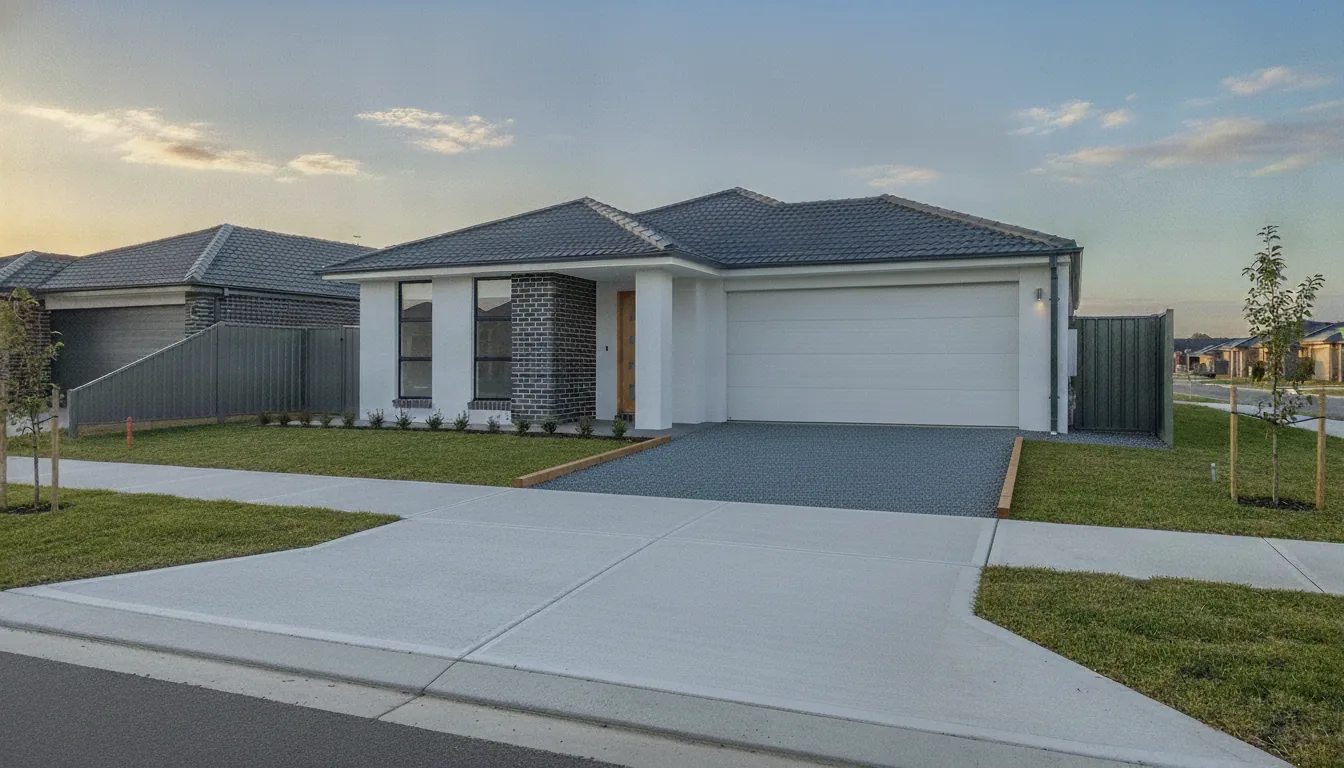
Why gravel is the right call on some Melton blocks
The City of Melton runs from the estates at Cobblebank and Aintree out to genuine rural land at Toolern Vale, Exford, Eynesbury, Plumpton, Mount Cottrell and Parwan. On those blocks the driveway might be 80 metres from the road to the house and longer again to a shed. Concrete at that length is a serious sum and asphalt still carries a mobilisation cost. A well-built gravel driveway does the job for a fraction of either, drains naturally, and can be regraded and topped up for decades.
Gravel also suits a driveway that is going to change. If a shed, a second dwelling or a new crossing is in the plans, gravel now and a hard surface later costs less than pouring twice.
Where it does not suit is a steep grade, where loose stone migrates downhill every time it rains, or a driveway that will carry constant turning traffic at the house end. On those we will usually suggest a hard surface for the steep or busy section and gravel for the run.
Built in layers, not tipped from a truck
A load of crushed rock spread over the paddock is the reason gravel has a poor reputation. Within a winter it has been pushed into the clay by the first few dozen wheel passes and you are driving on mud with stones in it.
A driveway that lasts starts with the subgrade. We strip the topsoil and any vegetation, shape the ground to a crown or a cross-fall, and compact it. On the softer, wetter parts of a block we lay a geotextile fabric over the clay first. The fabric separates the stone from the clay so the two cannot mix, and it is the single cheapest thing you can add to a gravel driveway on this soil.
On top goes the base: 100 to 150 mm of 40 mm or 20 mm Class 3 crushed rock, placed in layers and compacted with a roller or plate compactor, not just driven over. Then the wearing course, a 30 to 50 mm layer of finer material that locks together under traffic: 20 mm minus crushed rock, a crusher dust blend, or a decorative topping. The base carries the load. The wearing course is what you see and what you top up.
Drainage decides everything on clay
Melton's clay does not drain. Water that lands on a flat gravel driveway sits in the base, softens the clay beneath it, and the next vehicle pushes the stone down into the soft spot. That is how every pothole on every rural driveway starts.
So the driveway is shaped to shed water: a crown along the centre or a cross-fall to one side of around three to five per cent, table drains or a swale alongside on longer runs to carry the water away, and culvert pipes where the driveway crosses a natural low point so water passes under it rather than over. On a long rural driveway the drainage is often more work than the gravel, and it is the part that decides whether you are regrading once a year or rebuilding every two.
Choosing the surface
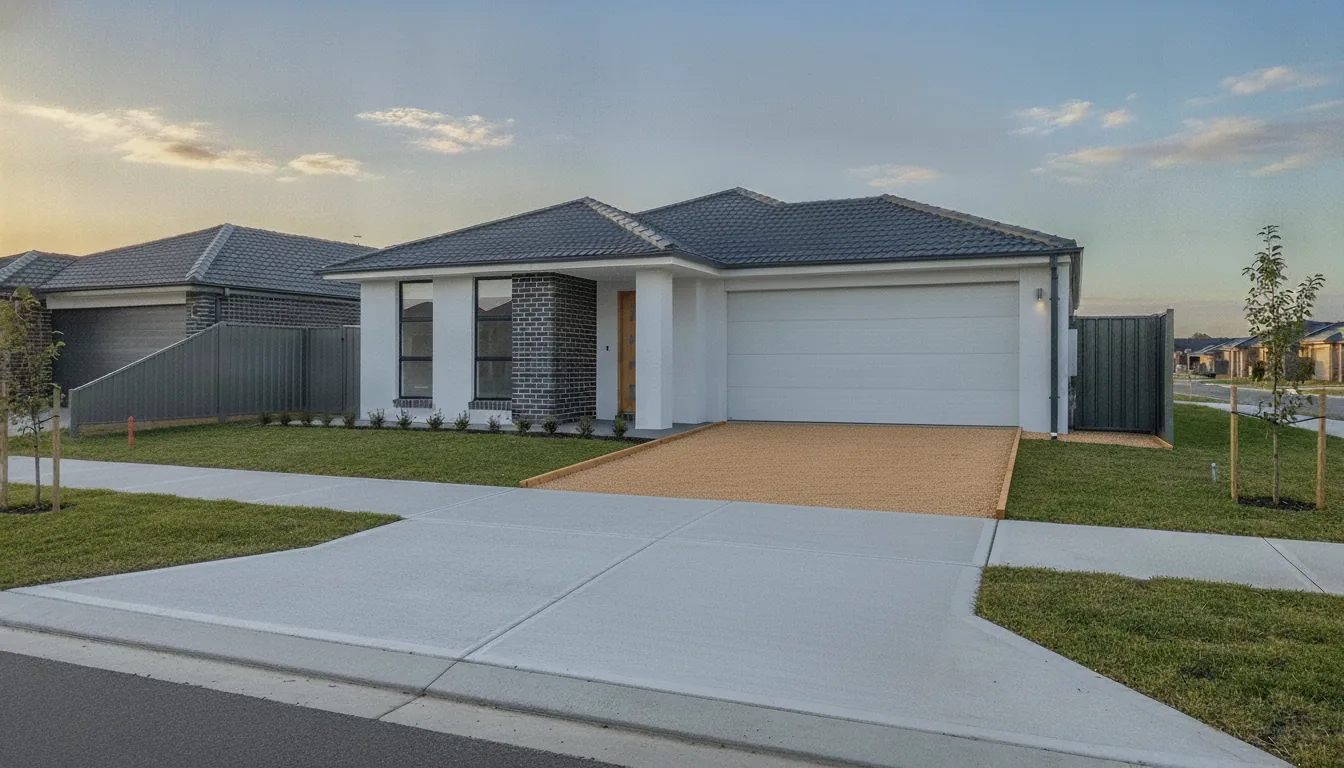
Plain crushed rock is the workhorse: grey-blue basalt from the quarries around Melbourne's west, cheap, hard-wearing and easy to top up. Recycled concrete crushed rock is cheaper again and compacts well, with a paler, slightly dustier finish. For a driveway near the house that you want to look finished, Victorian toppings are the usual choice. Lilydale toppings compact to a warm buff colour with a firm surface, Tuscan toppings run redder, and granitic sand gives a pale, tightly bound finish that suits a garden setting. Toppings cost more per tonne and are usually laid as the wearing course over a crushed rock base rather than through the full depth.
Scoria is often asked about because of its colour. It is light and crushes under vehicle loads, so we do not recommend it for a driveway.
Edges and the crossing
Gravel migrates. Without an edge it spreads into the lawn and the paddock and the driveway thins from the outside in. A timber, steel or concrete edge along a domestic driveway holds the material in place and gives you a clean line to mow to. On a rural run a compacted shoulder does the same job more cheaply.
The crossing at the road is not part of the gravel. On a kerbed street it has to be a concrete crossover built to Melton City Council's standard, under a permit, with an inspection. On an unkerbed rural road it is usually a piped culvert crossing to council's rural standard, and the permit still applies. We handle the crossing under the same quote, which for a rural block often includes the culvert pipes and headwalls that let the roadside drain keep flowing.
Rural driveways: length changes the maths
On a 100 metre driveway the numbers are dominated by tonnes of stone and hours of machine time, and by how far the quarry is from your gate. Melton is well placed for both, with quarries and recyclers within a short haul across Melbourne's west. What changes the price most on a long run is the ground itself: how much shaping and drainage it needs, whether there are low points that need culverts, and how much of the run needs fabric.
What a gravel driveway costs in Melton
As a rough guide, a gravel driveway built in layers over a prepared subgrade runs somewhere between $25 and $60 per square metre installed, with decorative toppings and fabric at the upper end and a plain crushed rock rural run at the lower. A 100 square metre driveway at 150 mm total depth needs around 30 tonnes of material, which gives you a feel for why supply and cartage make up so much of the cost. The crossover is priced separately because it is concrete and carries the permit. We quote on site, and the quote states the layers, depths and materials so it can be compared with another.
Maintenance: what to expect
A gravel driveway is not maintenance free, and anyone who tells you otherwise is selling one. Expect to regrade it every year or two to pull migrated material back into the wheel ruts and restore the crown, and to top up the wearing course every two to four years depending on traffic. Potholes that appear should be filled from the base up, not just topped with loose stone. Weeds come through in time and are easier to control with fabric underneath. Done routinely, none of this is expensive, and a gravel driveway that is looked after stays a driveway indefinitely.
Why choose us for gravel driveways
- Topsoil stripped and the subgrade shaped and compacted before any stone arrives
- Geotextile fabric on soft clay so the base cannot sink into the ground
- Crown or cross-fall and table drains built in, because drainage decides the life of a gravel driveway
- Crushed rock, recycled rock or Victorian toppings, matched to the job and the budget
- Concrete or culvert crossing to council standard handled under the same permit
Gravel Driveways — common questions
How much does a gravel driveway cost in Melton?
As a rough guide, somewhere between $25 and $60 per square metre installed for a driveway built in layers over a prepared subgrade. Plain crushed rock on a rural run sits at the lower end; decorative toppings, geotextile fabric and edging push it toward the upper end. Material and cartage are a large share of the cost, so the length of the run and the distance from the quarry matter. The crossover at the road is priced separately because it is concrete and carries a council permit. We quote on site.
How deep should a gravel driveway be?
For cars and utes on Melton's clay, plan on 100 to 150 mm of compacted crushed rock base with a 30 to 50 mm wearing course on top, so 150 to 200 mm in total after the topsoil is stripped. Softer ground and heavier vehicles need more base, and a geotextile fabric under it. A single 50 mm layer tipped straight onto the clay is what most failed gravel driveways turn out to be when you dig into them.
Do I need fabric under a gravel driveway?
On reactive clay that holds water, it is the best value item on the job. Geotextile fabric sits between the clay and the stone and stops the two mixing, so the base stays a base instead of being pumped down into mud under traffic. It also slows weeds. On a firm, well-drained section it can be skipped, but on the low, wet parts of a Melton block we would not build without it.
Which gravel is best for a driveway?
For the base, 20 mm or 40 mm Class 3 crushed rock, which compacts hard and drains. For the surface, 20 mm minus crushed rock or a crusher dust blend if you want a plain finish, or a Victorian topping such as Lilydale, Tuscan or granitic sand if you want colour near the house. Recycled concrete crushed rock is a cheaper base option. Avoid rounded pebbles, which never lock together, and scoria, which crushes under vehicle loads.
Can I have a gravel driveway in a new Melton estate?
Behind your boundary, council does not require a particular surface, but many estate design guidelines require a hard-surfaced driveway to be completed before occupancy, so check your developer's guidelines and any covenant on the title first. The crossover across the nature strip must be concrete to council standard regardless. Where gravel is allowed, a concrete apron at the boundary stops stone migrating onto the footpath and gives the crossover a clean edge to finish against.
Why does my gravel driveway get potholes every winter?
Water is sitting in the base. A flat gravel driveway on clay holds water, the clay softens, and each vehicle pushes the stone down into the soft spot until a hole forms. Filling the hole with loose gravel treats the symptom. The fix is a crown or cross-fall so water runs off, a drain alongside to take it away, fabric under the base where the ground is soft, and filling potholes from the base up with compacted material.
How often does a gravel driveway need maintenance?
Expect a regrade every year or two to pull migrated stone back into the wheel tracks and restore the crown, and a top-up of the wearing course every two to four years depending on traffic. A driveway with good drainage and fabric under it sits at the long end of both. A driveway that was tipped onto flat clay needs attention every few months and is usually cheaper to rebuild properly than to keep patching.
Do I need a council permit for a gravel driveway?
Not for the driveway inside your property boundary. The crossing where it meets the road does need a permit from Melton City Council, whether it is a concrete crossover on a kerbed street or a piped culvert crossing on a rural road, and the contractor building it has to carry public liability insurance to work in the road reserve. We lodge that as part of the job. Confirm current requirements with council, as local laws and fee schedules are reviewed periodically.
Ready to book gravel driveways?
Contact us today for your free, no-obligation quote.