
Driveway Resurfacing in Melton
Most driveways that look finished are not. A grey, cracked, rough asphalt driveway on a sound base can be resurfaced in a day for a fraction of the cost of digging it out. The whole job turns on one question, and it is the one we answer before we quote: is the base still good?
What resurfacing is, and what it is not
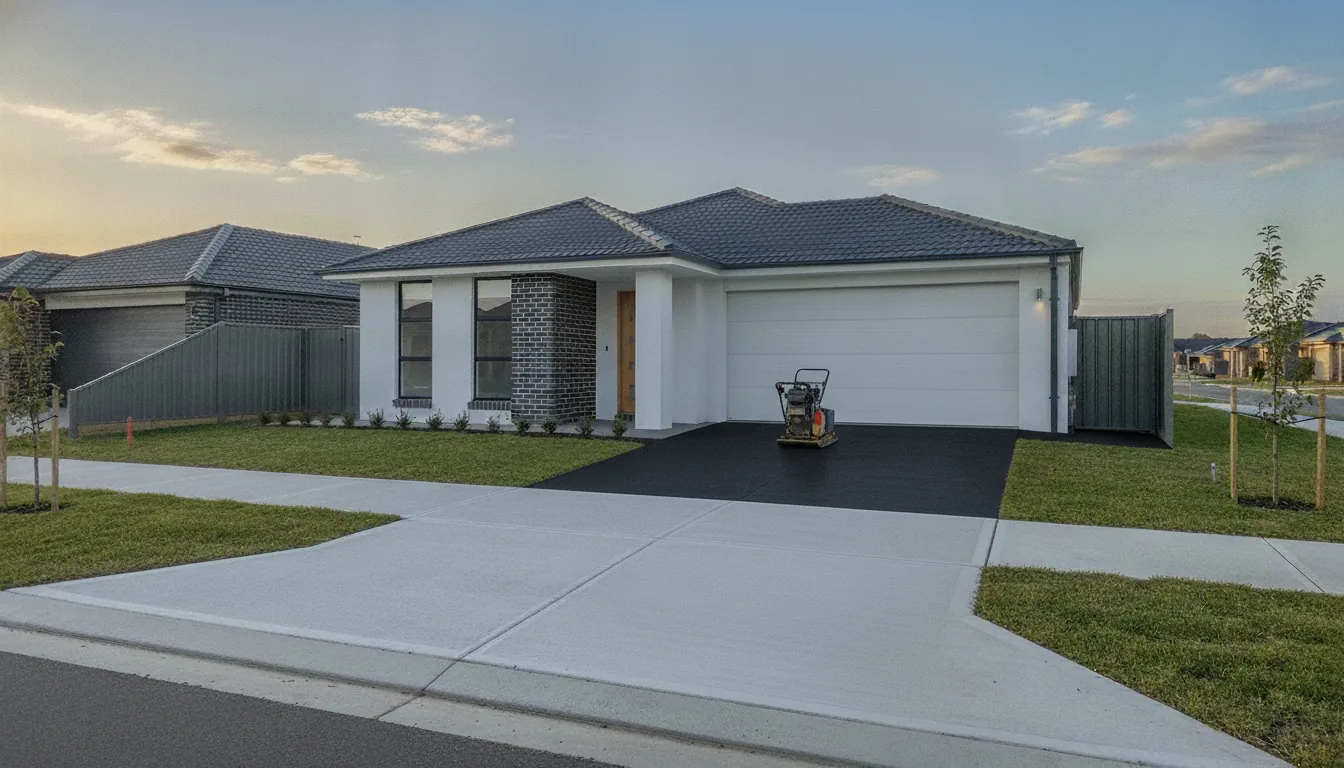
Driveway resurfacing means laying a new wearing course over the driveway you already have. On an asphalt driveway that is a fresh 25 to 30 mm layer of hot mix asphalt, rolled onto the old surface after it has been cleaned, repaired and primed. On a sound concrete driveway it is an asphalt overlay of 30 to 40 mm over the slab. Either way you keep the base and the levels you have, and you get a surface that looks and drives like a new driveway.
What it is not is a fix for a driveway that has failed underneath. A new layer over a rutted, sinking or pumping base looks good for one summer and then follows the base down. Half the resurfacing enquiries we get in Melton are for driveways that need this honesty more than they need asphalt, and we would rather tell you that on the first visit than resurface something we know will not last.
Is your driveway a candidate? The base test
The signs that a driveway is a good resurfacing candidate are surface signs: colour gone from black to grey, a rough or ravelled texture where the fine material has worn away, hairline and block cracking, edges crumbling, and shallow surface potholes that have not gone through to the base. The driveway is still flat. Water still runs off it the way it was designed to.
The signs that the base has gone are shape signs: wheel ruts you can feel, a low spot that holds a puddle after rain, potholes that come back after being filled, a section that flexes or feels soft under a heavy vehicle, and alligator cracking, the tight network of interlocking cracks that means the layer underneath is moving. On Melton's clay these usually trace back to water getting under the driveway and softening the ground, and a new surface will not stop that.
Most driveways are a mix. A long run that is sound with one failed section near a downpipe or a gateway is common, and the answer is to cut out and rebuild the failed section, then resurface the lot.
Asphalt over asphalt
This is the standard resurfacing job and the cheapest way to get a new driveway. The old surface is swept and cleaned, cracks are filled, potholes are cut back to sound material and patched with hot mix, and crumbled edges are cut to a straight line. A tack coat of bitumen emulsion bonds the new layer to the old. Then the new hot mix goes down with a paver or by hand on a small driveway, and is rolled while it is hot.
The finished level rises by the thickness of the overlay, so we check the garage slab, the front threshold and any drainage grates before we quote. Where the levels are tight, the old surface can be milled back along the edges so the new layer feathers in without a lip.
Asphalt over concrete
A sound concrete driveway that you are tired of looking at, or that has become slippery and stained, can take an asphalt overlay. The slab needs to be structurally sound, not heaving or stepped at the joints, and there has to be 30 to 40 mm of room at the garage and the threshold. Any joints and cracks in the concrete will eventually reflect through the asphalt as fine lines. That is cosmetic rather than structural, and on a driveway with a lot of joints it is worth knowing before you choose it.
Where the concrete is heaving on Melton's clay or cracked through, an overlay inherits every one of those movements. Removal and a new driveway is the better path, and we will say so.
Resurfacing a concrete driveway with concrete
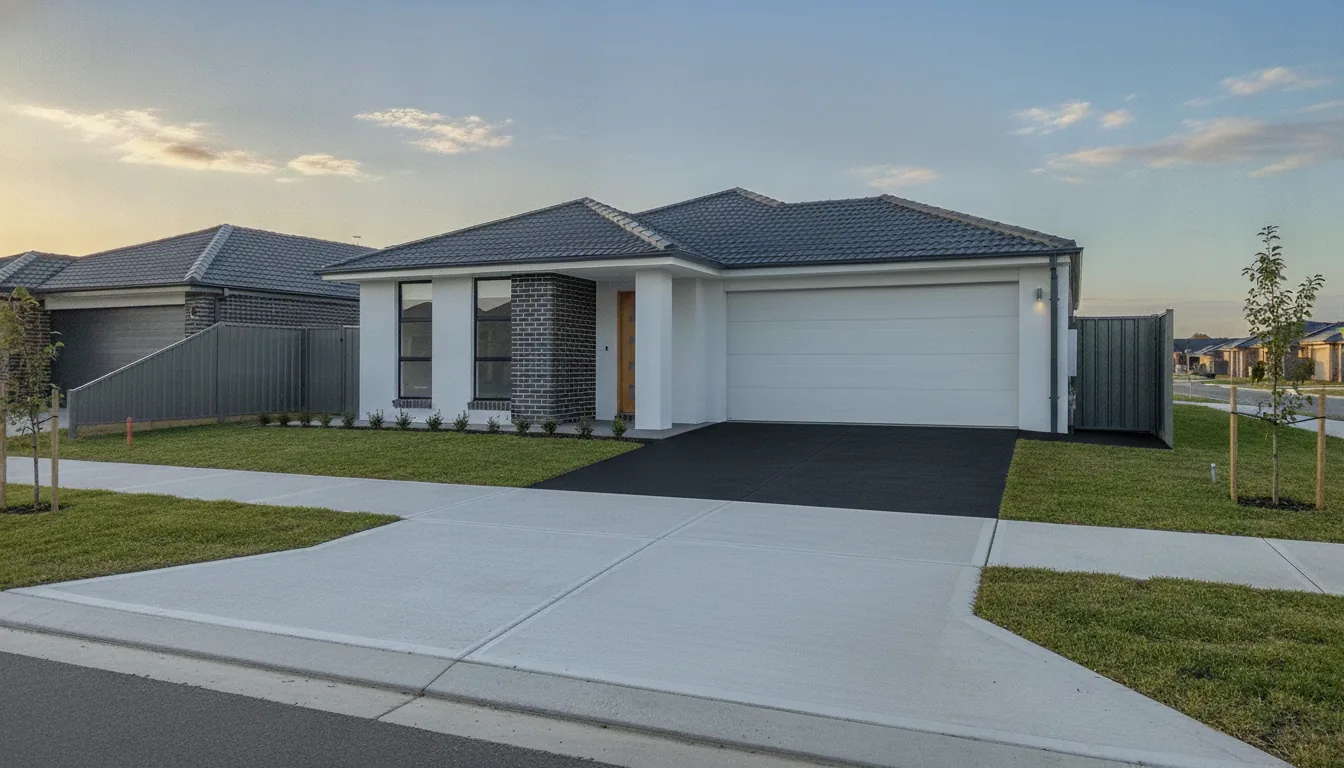
People ask whether a worn concrete driveway can be topped with more concrete. Pouring a thin layer of ordinary concrete over an old slab does not work: it is too thin to carry vehicles, it debonds and it cracks. The products that do work are spray-on and trowelled resurfacing systems, thin polymer-modified coatings a few millimetres thick that give a fresh finish and colour over sound concrete. They are a cosmetic refresh rather than a structural one, they need a clean, sound slab and a proper primer, and they wear through in the wheel tracks over time. We can advise on whether your slab suits one, but if the slab itself is cracking or moving, the cost of a coating is better put toward replacement.
Repairs first: cracks, potholes and edges
Resurfacing over unrepaired defects is the most common shortcut and the one that fails fastest. Cracks wider than a few millimetres are cleaned out and filled. Potholes are cut back square to sound material, the base under them is compacted or replaced, and they are patched with hot mix rather than cold mix. Broken edges are cut to a line and, where there was never any edge support, a concrete edge strip or a compacted shoulder is added so the new surface has something to lean on. Where a section has failed, it comes out entirely and is rebuilt from the base up before the overlay goes on.
Levels, thresholds and drainage
Every overlay raises the driveway, and a driveway on Melton's clay is part of the property's drainage whether anyone planned it that way or not. Before quoting we check where the water goes now and where it will go once the surface is 30 mm higher. Falls away from the house have to survive the overlay. Grates and pits are raised or the surface is shaped to them. A threshold that ends up below the driveway is a way to put water into your garage, and it is a mistake that is much easier to avoid than to fix.
Resurfacing vs replacement: the cost
Resurfacing skips the excavation, the spoil removal and the new base, which is most of the cost of a new driveway. As a rough guide, an asphalt overlay on a sound driveway in Melbourne's west runs somewhere around $35 to $70 per square metre, against $90 to $150 for a new asphalt driveway with a full base and considerably more for concrete. Small driveways carry a minimum charge because the crew, the rollers and the hot mix have to be mobilised regardless. Sections that need rebuilding from the base are priced on top.
The comparison to make is not resurfacing against nothing. It is resurfacing that lasts ten to fifteen years against a replacement that lasts twenty-five. When the base is sound, resurfacing wins easily. When it is not, resurfacing is money spent twice.
The crossover
The crossing between your boundary and the kerb is council's, and it stays concrete. Melton City Council's standard requires a concrete crossover on a kerbed street, and asphalt cannot be laid over it. If the crossover is cracked or has sunk, that is a separate job under a council permit, and we do those too. The usual arrangement is a resurfaced driveway to the boundary with the joint on the boundary line so the change of surface reads as intended.
After resurfacing
Cars can use the new surface after 24 to 48 hours, longer in hot weather. Avoid turning the wheels while stationary for the first few weeks, keep jockey wheels and trailer stands off it or on a board, and give it six to twelve months before any seal coat. A bitumen emulsion seal every three to five years after that keeps water out and holds the colour. Fix any crack or pothole as soon as it appears, because on this clay a small hole is a water inlet to the base, and the base is the thing you just paid to keep.
Why choose us for driveway resurfacing
- Base assessed honestly before we quote, and failed sections rebuilt rather than covered
- Cracks, potholes and crumbled edges repaired before the overlay goes on
- Levels at the garage, threshold and drains checked so the new surface does not trap water
- Hot mix overlay rolled while hot, feathered at the edges, no lip at the boundary
- Straight comparison against replacement so you can decide with the numbers
Driveway Resurfacing — common questions
How much does driveway resurfacing cost in Melton?
As a rough guide, an asphalt overlay on a sound driveway runs somewhere around $35 to $70 per square metre in Melbourne's west, against roughly $90 to $150 for a new asphalt driveway with excavation and a full base. Small driveways carry a minimum charge because the crew, rollers and hot mix are mobilised whether the job is 40 square metres or 400. Any sections that have to be rebuilt from the base, edge strips and level adjustments are priced on top. We quote on site after looking at the base, and the quote states the overlay thickness and what is included.
Can any driveway be resurfaced?
No. Resurfacing works when the base under the driveway is still sound and the problems are on the surface: fading, roughness, hairline cracks, crumbled edges and shallow potholes. It does not work over a base that has failed, which shows up as wheel ruts, puddles that sit after rain, potholes that keep returning, soft spots and networks of interlocking cracks. Those sections need to be cut out and rebuilt before anything goes on top. Most Melton driveways are a mix, and we deal with the failed sections first.
Can you resurface a concrete driveway with asphalt?
Yes, if the slab is structurally sound and there is 30 to 40 mm of room at the garage door and front threshold to raise the surface. The concrete's joints and cracks will eventually show through the asphalt as fine lines, which is cosmetic. A slab that is heaving on reactive clay, stepped at the joints or cracked through will pass all that movement into the overlay, and replacement is the better answer there.
How long does resurfacing take, and when can I drive on it?
A typical residential driveway is resurfaced in a day once any repairs are done, and repairs to failed sections may add a day before that. Cars can use the new surface after 24 to 48 hours, longer on a hot day. For the first few weeks avoid turning the wheels while parked and keep trailer stands and jockey wheels on a board. Heavy vehicles should stay off it for around a month while it hardens.
How long does a resurfaced driveway last?
On a sound base, a hot mix overlay typically gives ten to fifteen years, with a seal coat every three to five years and prompt repair of any cracks. That is less than a new driveway on a new base, which is why the comparison matters: resurfacing at roughly half the cost for around half the life is a good deal when the base is good, and a poor one when the base is already failing and will take the new layer down with it.
Should I resurface or replace my driveway?
Resurface if the driveway is still flat, water runs off it, and the problems are colour, texture, small cracks and edges. Replace if it has ruts, puddles, returning potholes, soft sections or widespread interlocking cracking, because those are base failures and no surface layer fixes them. Where only one section has failed, cutting that out, rebuilding it and resurfacing the rest is usually the right middle path. We look at the driveway and tell you which you have before quoting either.
Will the old cracks come back through the new surface?
Fine cracks and the joints in a concrete slab tend to reflect through an overlay over time as thin lines, which is cosmetic and can be sealed. Cracks that were structural, meaning the base under them is moving, will come back as real cracks unless that section is rebuilt first. That is why we cut out and repair before overlaying rather than hoping the new layer bridges the problem. Filling and sealing the cracks properly before the overlay slows reflective cracking considerably.
Do I need a council permit to resurface my driveway?
Not for the driveway inside your property boundary. The crossover between your boundary and the kerb is different: it sits in council's road reserve, it has to be concrete to Melton City Council's standard on a kerbed street, and asphalt cannot be overlaid on it. If the crossover itself needs replacing, that is a separate permitted job with an inspection, which we handle. Confirm current requirements with council, as standards and fees are reviewed periodically.
Ready to book driveway resurfacing?
Contact us today for your free, no-obligation quote.