
Crossover Widening & Replacement in Melton
Widening or replacing an existing crossover is a "crossover variation" in council's language, and it needs written approval exactly as a new one does — plus some retrofit details most concretors miss.
Widening is a variation, not a repair
It is tempting to think that because a crossover already exists, widening it is maintenance. Council does not see it that way.
Melton's Crossover Policy defines a crossover variation as the process where residents apply to construct a new crossover *or modify an existing one*. Either way it requires written approval from council, and the same approval, consent, inspection and reinstatement sequence applies.
The same is true of replacing one that has failed — cracked, sunk, or been chewed up by heavy vehicles. If the geometry changes at all, it is a variation.
The retrofit details that get missed
Building a crossover where one already exists carries requirements that a fresh crossover does not, and MCC 501 spells them out.
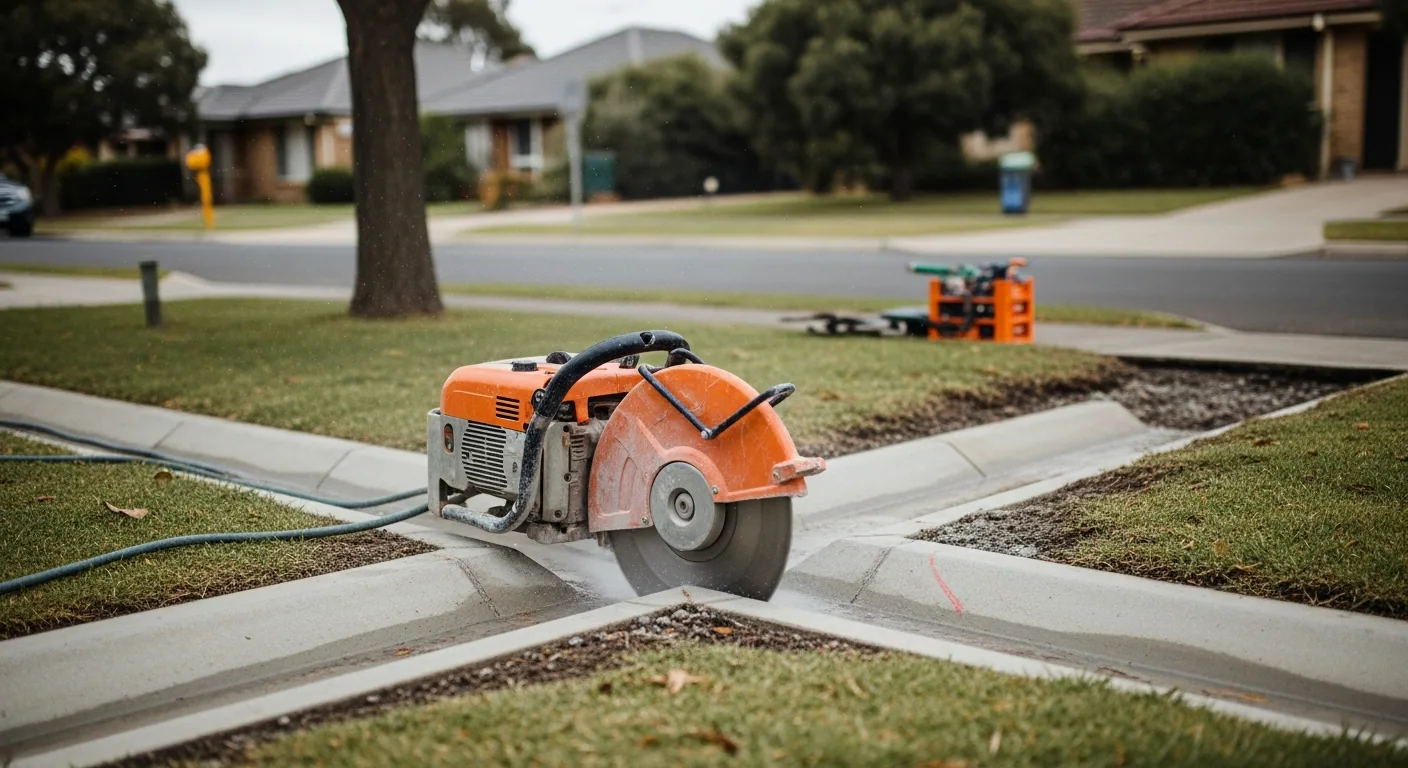
The kerb must be saw cut. Where a vehicle crossing is retrofitted, the existing barrier-type kerb and channel must be saw cut, 50 mm from the invert line of the kerb, with the new kerb sloped back to the invert line. Council's policy adds that where an application includes relocating a crossover, the saw cutting of the existing crossover must be observed during the inspection. So this is not something that can be tidied up afterwards.
Retrofit reinforcement differs. MCC 501 calls for N12 deformed bars 450 mm long at 300 mm centres, centrally placed, specifically for retrofit construction.
The footpath may have to be rebuilt. Where the crossing is retrofitted and the existing footpath is less than 125 mm thick, one bay of path — typically 1500 mm wide — on either side of the crossing must be removed, replaced with 125 mm thick footpath, and joined to the existing path with an expansion joint. That is a real scope item on older streets, and it is the one most commonly left out of a cheap quote.
No bullnose. Council will not accept a bullnose in the invert of the kerb.
Going from single to double
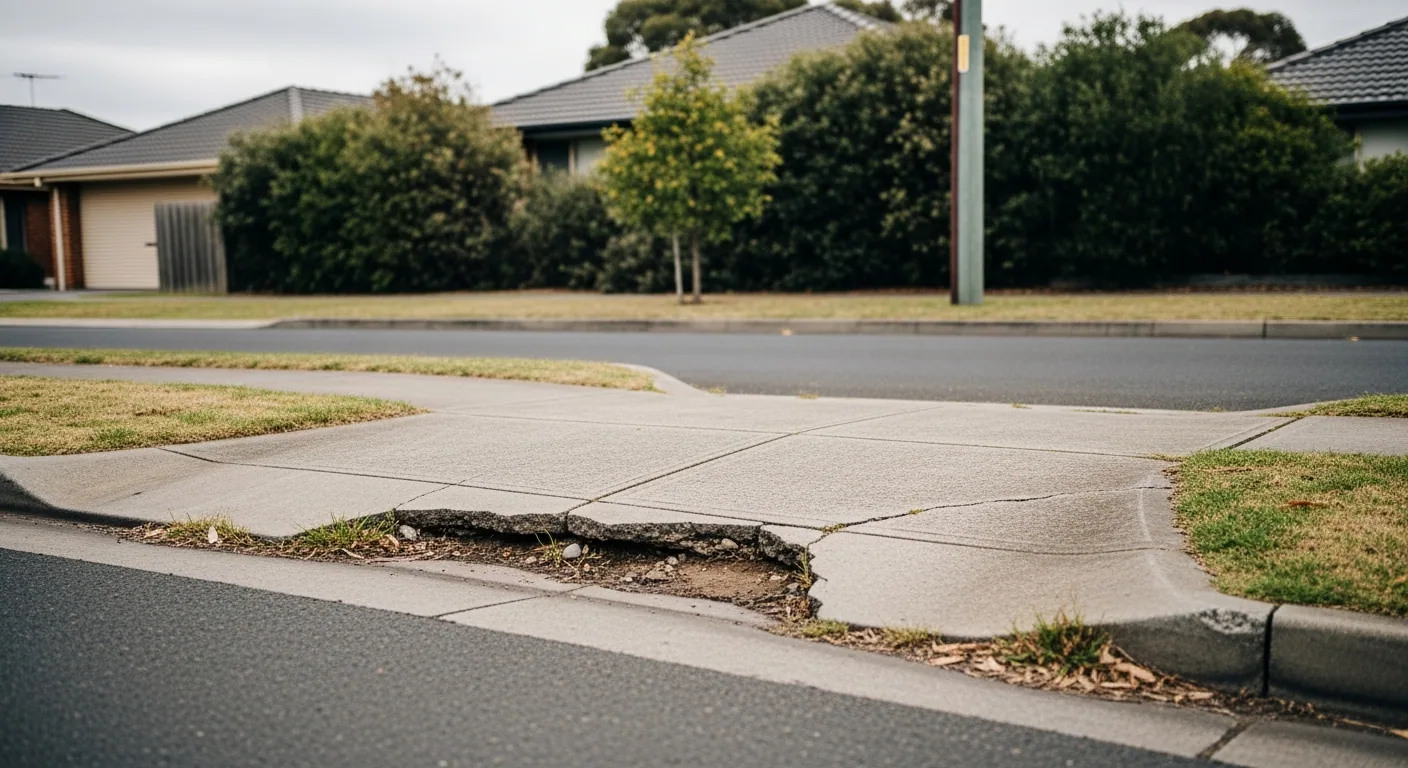
The usual reason for widening. Two limits govern how far you can go:
Melton Planning Scheme Clause 55.03-9 — accessway width should not exceed 33 per cent of your street frontage, or 40 per cent where the frontage is under 20 metres
The clearance table — you still need 1.0 metre from poles, street lights, signs, hydrants and utility assets, 0.75 metres from drainage pits, 2.5 metres from trees depending on size, 2.0 metres from pram crossings and 6.0 metres from an intersection tangent point
Widening frequently runs a crossover towards an asset it previously cleared comfortably. That is the most common reason a widening application is knocked back, and it is exactly what a site check before applying is for.
If a service asset genuinely has to move, that is arranged by you with the relevant authority — Telstra, Powercor, Jemena, Greater Western Water — at your cost. Worth knowing before committing.
Replacing a failed crossover
Common causes we see around Melton:
Heavy vehicle loading on a slab never built for it — removal trucks, concrete trucks and skip bins during a build
Base failure on reactive clay where the original was laid on inadequately compacted ground
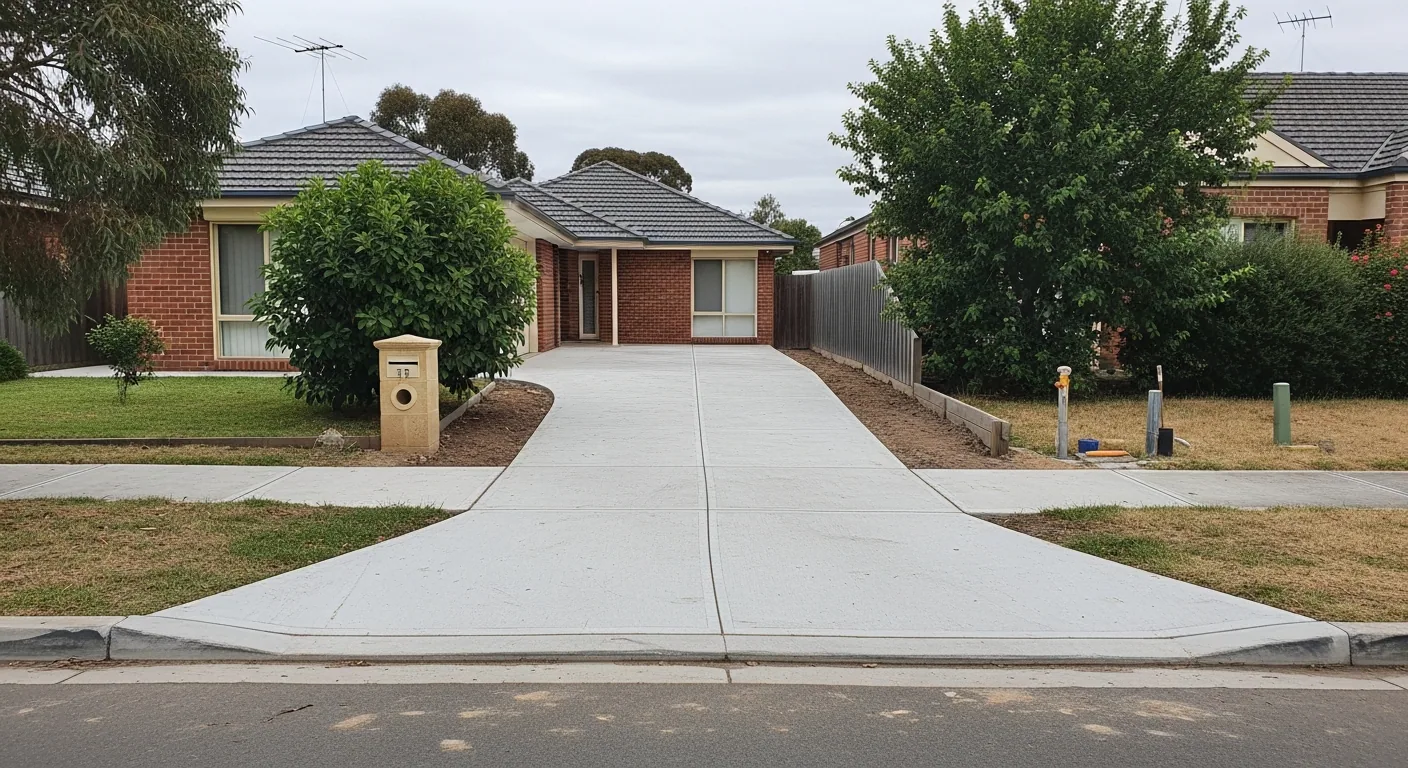
Cracking at the kerb transition where the original was poorly jointed
Sinking where a service trench beneath was never properly backfilled and compacted
That last one matters, because it dictates the fix. MCC 501 requires trenches crossing the concrete to be backfilled with compacted 20 mm Class 3 crushed rock or crushed concrete. Repouring over a poorly compacted trench simply reproduces the failure.
What you should expect from us
A site check against the clearance table before lodging, so you are not paying for an application that cannot succeed
The crossover variation application and the road reserve consent lodged for you
$10 million public liability, which council requires before it will issue consent
Kerb saw cut correctly and the pre-pour inspection booked and attended
Footpath bays replaced where the existing path is under 125 mm thick, quoted upfront rather than raised mid-job
Nature strip reinstated with topsoil and seed
Why choose us for crossover widening & replacement
- Clearances checked against council's table before you pay to apply
- Kerb saw cut to MCC 501, and the cut observed at inspection as required
- Footpath bay replacement quoted upfront where the path is under 125mm
- Retrofit reinforcement per the standard, not the new-build detail
- Trench backfill compacted properly, so the failure does not repeat
Crossover Widening & Replacement — common questions
Do I need council approval to widen an existing crossover?
Yes. Council's policy defines a crossover variation as applying to construct a new crossover or modify an existing one, and both need written approval. Widening is a modification, so the full sequence applies — application, site inspection by a technical officer, letter of approval with conditions, road reserve consent, pre-pour inspection and nature strip reinstatement. It is not treated as maintenance.
Can I widen my single crossover to a double?
Often yes, but two limits decide it. The planning scheme caps accessway width at 33 per cent of your street frontage, or 40 per cent where the frontage is under 20 metres. And the widened crossover must still meet the clearance table — 1.0 metre from poles and utility assets, 0.75 metres from drainage pits, 2.5 metres from trees, 6.0 metres from an intersection tangent point. Widening often moves a crossover towards an asset it used to clear, which is the usual reason applications get refused.
What happens to the kerb when the crossover is replaced?
It has to be saw cut. MCC 501 requires the existing barrier-type kerb and channel to be saw cut 50 mm from the invert line, with the new kerb sloped back to that line, and council requires the saw cutting to be observed during inspection when a crossover is being relocated. Council also will not accept a bullnose in the kerb invert. This is a detail that separates a compliant job from one council can reject.
Will my footpath need replacing too?
Possibly, and it is the scope item most often missing from cheap quotes. Where a crossing is retrofitted and the existing footpath is less than 125 mm thick, one bay of path — typically 1500 mm wide — on either side of the crossing must be removed, replaced at 125 mm thick, and joined to the existing path with an expansion joint. On older Melton streets that is common. We check the path thickness and quote it upfront.
My crossover has cracked and sunk. Why?
The usual causes are heavy vehicle loading on a slab never designed for it — removal, concrete and skip trucks during a build are frequent culprits — base failure where the original was laid on poorly compacted reactive clay, poor jointing at the kerb transition, or a service trench beneath that was never properly backfilled. That last one matters most, because repouring without compacting the trench simply repeats the failure a few seasons later.
There is a power pole where I want to widen. Can it be moved?
Sometimes, but it is your project and your cost. Council requires 1.0 metre clearance from electricity poles and other utility service assets, and its policy states that relocating services to achieve the desired crossover position must be organised by the property owner with the relevant authority at the owner's expense. Before going down that road, it is worth checking whether shifting the crossover along the frontage solves it for nothing.
Can you just repair the damaged section rather than replace it?
Sometimes, where the damage is localised, the base is sound and the geometry is not changing. But patching a crossover that failed because of base or trench problems is money spent on a repeat performance. And if the repair changes the geometry at all, it becomes a variation needing council approval. We will tell you honestly which situation yours is after looking at it.
How long does a crossover replacement take?
The construction is short — typically a matter of days including breakout, base preparation, the pre-pour inspection and the pour. What sets the overall timeline is council: the variation application and site inspection come first, then the letter of approval, then road reserve consent before any work can start. Then you cannot use it until the concrete has gained strength. We lodge early so the paperwork runs while we schedule.
Ready to book crossover widening & replacement?
Contact us today for your free, no-obligation quote.